As another Easter approaches, I'm breaking from tradition and addressing taboos. Isn't that unsurprising! I've never been one for orthodox thought. Politically, I advocate the separation of church and state, for government that's impartial, neutral, that doesn't favor one belief over another, and fully respects those who don't believe in a Creator at all.
Spiritually, I find inspiration in nature, in people, in art, in music, in the expanding universe, and in a diversity of sacred texts. But I won't deny the influence of Christianity in the world--good and bad--or its patriarchal roots. So I tend to delve into its mythology. At the risk of getting flamed, I'll venture to crash some taboos with this post.
From The RealSpiel archives, 13 essays on Christian mythology and its impact on politics and culture.
The Passion of Christ for today
Why glorify the death and suffering of Jesus? If we explore the reasons for Christ's crucifixion and chose to change the "systems of oppression that brought about his demise, violence against marginalized people would cease to exist."
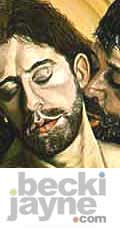
Did Jesus live the down low?
It's entirely possible that Jesus was a married, closeted gay man. But the bigger issue is homophobia in today's Church, the false socialization of who we are as male and female, and ultimately the challenge is to peel away a false spiritualization.
Biblical sexism and vagina resentment
The role of women was liberated by Christ's egalitarian teachings but the Bible has been edited and used as a patriarchal tool to oppress the feminine.
Armageddon: Bible literalists got it wrong
A majority of Americans believe in The Rapture based on a Bible that's fraught with errors. A footnote to copyists in the Book of Revelations has been interpreted to heed the texts as if they were the literal word of God.
The Bible is not the source
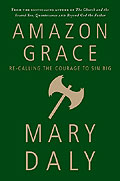
A woman's responsibility is to listen to her Inner Source--not to the Bible, not to the alleged "headship" of men, not to a patriarchal church with an ax to grind. Women have equal access to the Creator, the Source of All Life, for divine guidance. Looking to men for women's roles in life, church, and family, is asking the wrong source.
Angelic lesbian, one of RealSpiel's most popular
Why don't angels have genitals? Who stripped them of sexuality? I suppose Christian orthodoxy, which divides sexuality from spirituality and promotes the idea of a celibate Christ, offers the main reason for the absence of angelic sexuality. In my belief system, there's a guardian angel for everybody--gays, lesbians, bisexuals, asexuals, transsexuals, transgendered people, hermaphrodites--everyone and every creature.
The Bible as fountainhead of sexism: money, lesbian power and visions
Guest columnist Genet offers a lesbian feminist viewpoint into gaining success, money, and power. "It is something every lesbian spiritually alive needs to address -- dollars are a spiritual issue!"
In support of Kittredge Cherry
When Kitt Cherry, author of Jesus In Love, Art That Dares, and At The Cross, was attacked by the conservative Institute on Religion and Democracy for her beliefs in a queer Christ, the right to freedom of religion needed to be defended. Included are factors destroying marriage in America. And it's not the perceived threat of gay marriage.
The crucifixion of Madonna
The Material Girl's mock crucifixion received the scorn of Christian critics. Those who defended free speech of the Danish cartoons that set the Muslim world on fire suddenly went mute. Are western liberal values to be shared or hoarded by the religious right? Of course not.
Mel Gibson, hate speech, and media
"Lately this Republican political era of 'compassionate conservatism' has brought forward an unabashed no-holds-barred attitude when it comes to passionate invective hurled at queers, African-Americans, and Jews." Features The Stoning of the Drag Queen.
The Vatican v. Creationism
Vatican astronomer Guy Consolmagno denounced creationism but Biblical literalist Ken Ham chooses the Genesis story over science.
Richest nation on earth and the most Christian but...
Could have supporting the Iraq War offered a method of penance for American Christians who felt guilty and feared retribution for being so well off when so many people in the world languish in poverty? It's an odd concept but fear and guilt have spawned the most atrocious events in history.
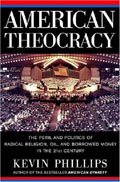
Fateful faithful: "American Theocracy"
On Easter Sunday 2006, a lament for the demise of the separation of church and state and the dangerous influence of Christian evangelical extremists on American politics.
Coming soon to celebrate the spring solstice: The Second Coming: The Return of the Goddess. [Update: Essay is here.] The link to the oil painting available at my artist website is here.
UPDATE: I meant spring equinox. I'm already looking forward to summer, but better to be here now.
Friday, March 14, 2008
13 essays on Christian mythology and taboos


Sunday, April 16, 2006
Fateful faithful: "American Theocracy"

Like a mighty army moves the church of God;
Brothers, we are treading where the saints have trod.
....Onward, Christian soldiers, marching as to war,
With the cross of Jesus going on before.
Onward, Christian Soldiers, lyrics by Sabine Baring-Gould
The erosion of democracy by faith-based politics has been confirmed by one of the GOP's expert strategist, Kevin Phillips, the Republican who wrote the 1969 prophetic book, The Emerging Republican Majority.
In Theocon and Theocrats at The Nation, borrowing from his latest release, American Theocracy, Phillips asks how dangerous has the influence of Christian evangelicals become? Aren't liberals hand-wringing over the Christian Taliban, a contradiction in light of lax morality and growing secularism? His answer is no.
Phillips places a good deal of the burden on Bush's Washington:
...an elected leader who believes himself in some way to be speaking for God; a ruling party that represents religious true believers and seeks to mobilize the nation's churches; the conviction of many rank-and-file Republicans that government should be guided by religion and religious leaders; and White House implementation of domestic and international political agendas that seem to be driven by religious motivations and biblical worldviews.
He writes about how "a theocratic trend fell into place in the late 1980s and '90s" from state (example: Texas GOP platform) and regional to national; presidential candidates who sprung from or catered to born-agains and proselytized the theocratization of the GOP culminating with "Jesus is My Hero" George W. Bush.
Toss in Clinton-hating, the Left Behind crowd, a post-modern Crusade against evil-doers, and I can take off my tinfoil hat now. The Dominionists have landed:
This metamorphosis gained further momentum after September 11, 2001, when the younger Bush responded to the terrorist attacks by declaring the start of a war between good and evil, speaking in a relentlessly religious idiom that several biblical scholars have described as double-coding--only mildly religious on the surface, but beneath that full of allusions to biblical passages and Christian hymns. They, too, suggested that Bush cast himself as a prophet of sorts--one who spoke for God.
[...]
The upshot of this escalating religiosity on the part of the Republican national leadership has been an escalating and parallel religiosity on the part of the Republican rank and file. Those voting Republican for President since 1988 have become increasingly religious in motivation. After 9/11 pro-Bush preachers described Bush as God's chosen man while hinting that Saddam Hussein, whose Iraq was the biblical "New Babylon" of fundamentalist preacher Tim LaHaye's eerie Left Behind series, was the Antichrist or at least the forerunner of the Evil One. In 2004 a further wave of evangelical, fundamentalist and Pentecostal turnout helped to cement the Republican transformation, even as moderate mainline Protestants shuddered and turned in a small Democratic trend between 2000 and 2004.
[...]
A majority of Americans take the Bible literally in many dimensions, including subjects ranging from the creation and Noah's Ark to the Book of Revelation. Within the ranks of Republican voters, the ratios are lopsided. For example, in 1999 a national poll by Newsweek revealed that 40 percent of American Christians believed in Armageddon and virtually as many thought the Antichrist was already alive. Because such believers were most numerous in the Republican electorate, I would calculate that roughly 55 percent of Bush 2004 voters believed in Armageddon--and it could be higher.
Such voters are especially prone to theocratic views, and foreign policy is by no means immune. In 2004 a survey by the Pew Center found that 55 percent of white evangelical Protestants consider "following religious principles" to be a top priority for foreign policy. Only a quarter of Catholics and mainline Protestants agreed, but given the makeup of the Bush coalition, I would guess that about half its voters would favor that position. This explains both why so many of Bush's core supporters cheered the first-stage US involvement in Iraq--and why Bush bungled things in the Holy Land so badly.
[...]
First and foremost are the issues involving birth, life, death, sex, health, medicine, marriage and the role of the family--high-octane subject matter since the 1970s. These are areas where perceived immorality most excites stick-to-Scripture advocates and the religious right. Closely related is the commitment by the Bush White House and the religious right to reduce the current separation between church and state.
...The institute's director, Roman Catholic Father Robert Sirico, contends that left-tilting environmentalism is idolatrous in its substitution of nature for God, giving the Christian environmental movement a "perhaps-unconscious pagan nature."
Then there is the subject matter of business, economics and wealth, in which the tendency of the Christian right is to oppose regulation and justify wealth and relative laissez-faire, tipping its hat to the upper-income and corporate portions of the Republican coalition. Christian Reconstructionists go even further, abandoning most economic regulation in order to prepare the moral framework for God's return.
Go read the rest. It's a long piece and I'm verklept at the potentiality of an American church-run state. The only speck of optimism I saw in Phillips' analysis speaks of "[t]hree prominent Republicans [who] have staked out the boundaries," perhaps the fracturing within the party between conservatives and the theocons. Phillips wraps up with a quote from Christopher Shays, R-CT, who laments that "the Republican Party of Lincoln has become a party of theocracy." OMG.
A fascinating read if not for the nightmarish consequences of a self-fulfilling Armageddon and the short-term economic challenges zero-planning for our nation's future on... Everything! But. Theocracy.
According to Vico, "a republic progresses from Chaos to Theocracy, then to Aristocracy, and finally on to Democracy." (h/t to Gore Vidal). We're headed two steps backward toward papal rule. What an Easter Sunday.